
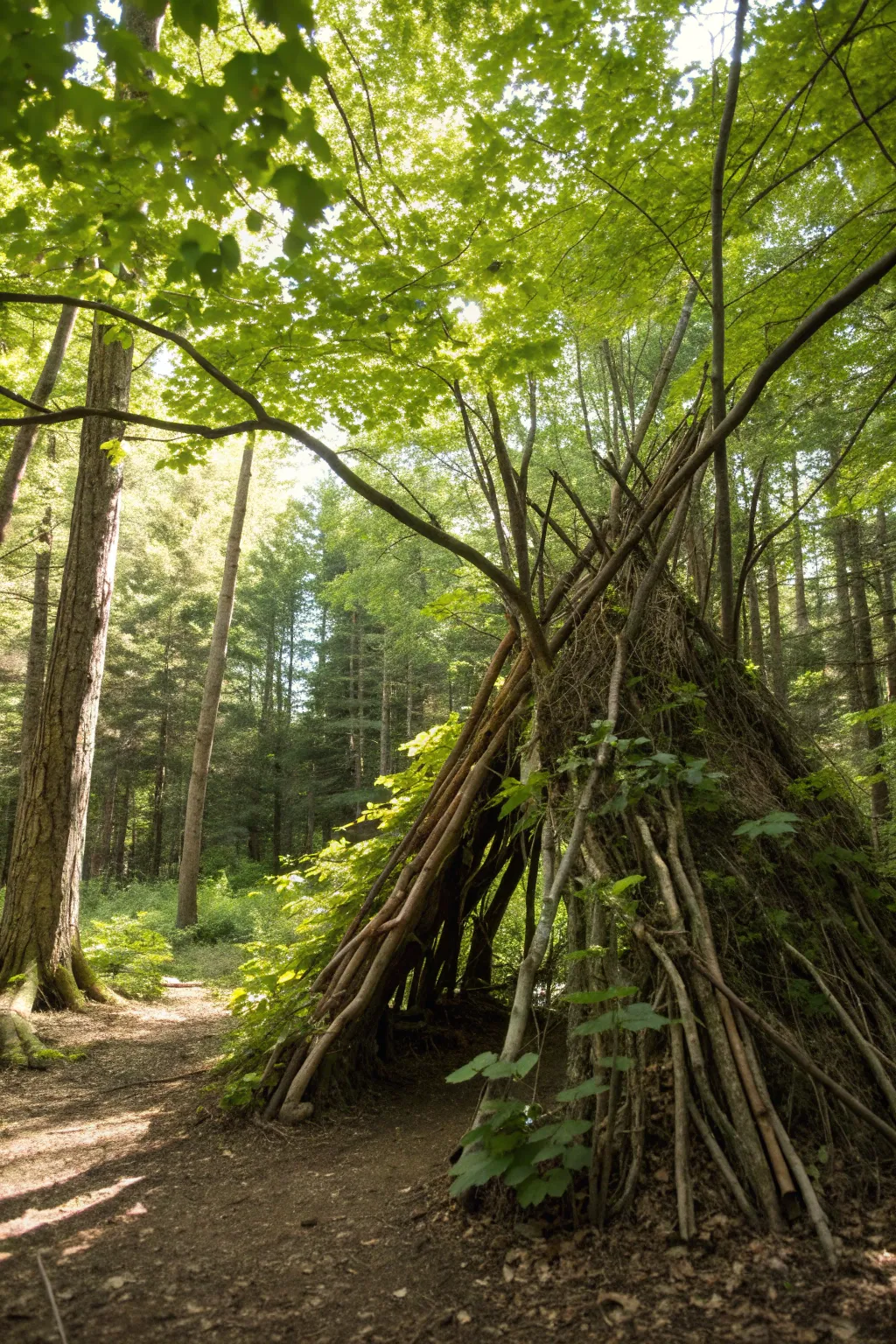
Exploring the great outdoors can be a thrilling adventure, but having the right shelter is key to a comfortable experience. Whether you’re a seasoned bushcrafter or a curious beginner, these bushcraft shelter ideas will spark your creativity and ensure you’re ready for any woodland retreat.
A-Frame Haven

An A-frame shelter offers great stability and protection from the elements. In my experience, it’s perfect for windy nights, especially if you secure it with additional branches and leaves for insulation.
Snow Shelter

In snowy climates, crafting a snow shelter can be a lifesaver. I remember being amazed at how warm the inside of a snow cave could be on a freezing night. For warmer weather trips, exploring different camp shade ideas is just as important for staying comfortable.
Bough Bed

Creating a bough bed raises you off the cold ground and provides a comfortable night’s sleep. I pile up soft branches and leaves, which make a surprisingly cozy mattress. Once your sleeping area is set, you can focus on setting up a functional outdoor camp kitchen for your meals.
Brush Shelter

A brush shelter uses the natural density of branches and brush to create a windbreak. I’ve found that it works wonders when combined with a lean-to for extra warmth. If you’re raising larger birds, this natural approach can easily be incorporated into various turkey coop ideas.
Classic Lean-To

The lean-to is one of the simplest shelters you can build, using a long branch propped between two trees. I’ve found that adding a thick layer of leaves on top makes a world of difference on a chilly night. If you prefer RV life over bushcraft, you might instead consider building a metal roof over your camper.
Hammock Setup

When the ground is challenging, a hammock becomes a delightful alternative. I’ve often enjoyed the gentle sway of a hammock under a starry sky, enveloped by my tarp for added protection. Exploring different tarp roof ideas can help you find the perfect overhead setup for your camp.
Underground Shelter

For those seeking a challenge, an underground shelter is a great way to blend with nature. While it takes more effort, the temperature control it offers is remarkable.
Fallen Tree Lean-To

Nature sometimes provides the best solutions, like a fallen tree that acts as a natural support for a lean-to. After a long hike, I once stumbled upon the perfect tree and had a shelter up in no time. If you spot any empty shells around the base of the tree, you can bring them home for some creative snail shell crafts.
Tarp Tent

For a quick setup, a tarp tent is unbeatable. I once spent a rainy night perfectly dry thanks to a tarp strung between two trees, proving that sometimes simple solutions are the best. You can even adapt this simple shelter to provide inexpensive shade for a small deck.
Natural Rock Shelter

Using rock formations as part of your shelter can provide excellent protection. Once, I found an overhang that required minimal work to turn into a snug retreat. If you are focusing on upgrading your backyard instead of roughing it in the wild, consider exploring some creative trampoline skirt ideas.
Sod Roof Shelter

A sod roof shelter offers excellent insulation and is great for blending in with your surroundings. I love how the grass and soil keep the interior cool in summer and warm in winter. If you have a larger pack, this style can easily be adapted into a spacious dog house for multiple dogs.
Rock Overhang

Utilizing a rock overhang can be a quick and effective shelter option. I once avoided a surprise storm by huddling under a natural rock formation, staying dry and secure.
Log Lean-To

Building a log lean-to provides durable protection against the wind. It’s a bit more work, but the comfort it provides during stormy nights is worth every effort.
Fire Reflector Shelter

Using a fire reflector with your shelter can greatly enhance warmth. I once arranged rocks to reflect the fire’s heat back into my shelter, creating a toasty haven.
Log Cabin Style

For a more permanent solution, a log cabin style shelter provides sturdy protection. Although it takes time to build, I’ve enjoyed the challenge and the rustic charm it brings. Adding a rustic outdoor sink completes the authentic woodland feel.
Debris Hut

A debris hut is nature’s sleeping bag, utilizing leaves and branches to create a cocoon of warmth. On a particularly cold trip, I piled on extra leaves and slept like a baby! If you prefer crafting indoors over sleeping in the woods, try making some elegant DIY black and gold centerpieces.
Wickiup

A wickiup is a domed structure using branches and leaves, perfect for longer stays. It’s not only functional but has a charming, earthy aesthetic I adore. If you’re inspired to build other functional outdoor structures on your property, you might also explore some DIY carport ideas.