
Hey there, fellow DIY enthusiast! If you’re dreaming of creating the perfect deer blind, I’ve got some exciting ideas that will transform your hunting experience.
Elevated Platform for a Bird’s Eye View

Building an elevated platform gives you the perfect vantage point to spot deer from afar. I once crafted one with reclaimed wood, and the view was simply breathtaking! Using leftover materials is always rewarding, much like finding new ways to repurpose blind slats for DIY projects.
Unique Design with Insulated Garage Doors

Transform insulated garage doors into walls for a sturdy blind. I tried this with salvaged doors, and it was both cost-effective and surprisingly chic! Before starting construction, sketching out a few blind drawing ideas can help you visualize the final structure.
Green Roof for Natural Camouflage

A green roof covered with moss or grass can be a natural camouflage. I tried this with a mix of soil and seeds, and the results were both eco-friendly and effective. If you enjoy hands-on crafts, you might also like trying some blind bag paper ideas.
Portable Skid for Easy Transport

Building your blind on skids makes it a breeze to transport. I once attached mine to a skid, making it easy to tow with an ATV. If your new blind helps you land a great buck, check out some creative deer head plaque ideas for your trophy.
Cozy Enclosed Space with Windows

Adding windows to your blind ensures you stay cozy while keeping an eye out. My last project used old window frames, which added a vintage touch.
Hay Bale Hideaways

If you’re near a field, using hay bales is an ingenious way to create a hidden spot. I once arranged hay bales into a perfect little hideout—it was both practical and fun!
Recycled Metal for Weatherproofing

Using recycled metal sheets can give your blind a long-lasting, weatherproof exterior. I found some at a salvage yard, and they’ve held up beautifully over time. These salvaged materials are also perfect if you’re looking for inexpensive privacy fence ideas.
Solar-Powered Gadgets

Incorporating solar power can keep your gadgets running smoothly. I added a solar panel to my blind, which powers a fan and phone charger—talk about luxury! You can easily adapt this same solar setup for other outdoor structures, like those found in these lean-to shed plans.
Upcycled Window Blinds for Camouflage

Repurposing old window blinds offers an adjustable camouflage option. I cut some to size and used them to cover openings, allowing me to control light and visibility.
Camouflage with Nature’s Touch

Surrounding your blind with natural foliage or camo netting can make it nearly invisible. I once used fallen branches and leaves to create a seamless blend with the surroundings.
Natural Blind from Fallen Trees

Using fallen trees and nearby brush, you can create a natural blind in no time. This quick setup saved me on a few occasions when I needed a fast hideaway! It’s actually one of the easiest survival shelter ideas you can build in a pinch.
Blend with Burlap and Paint

A burlap wrap with a splash of paint can make your blind blend seamlessly. I once tied burlap all around, giving it a camo look that was both practical and artistic. Similar creative techniques can even be applied to exterior camper paint jobs.
Weather-Resistant Fabrics for Durability

Using weather-resistant fabrics can extend the life of your blind. My blind withstood harsh weather thanks to some durable marine fabric I repurposed. Leftover material is also perfect for building custom DIY room dividers.
Hidden in a Haybale Structure

Crafting a blind that mimics a haybale is both sneaky and smart. I built one with straw blankets, and it was the ultimate disguise in open fields.
Rustic Charm with Pallet Wood

Using pallet wood not only gives your blind a rustic charm but also keeps costs down. I love how pallets naturally blend into the wooded environment. If you have leftover materials, there are plenty of other pallet wood projects you can try.
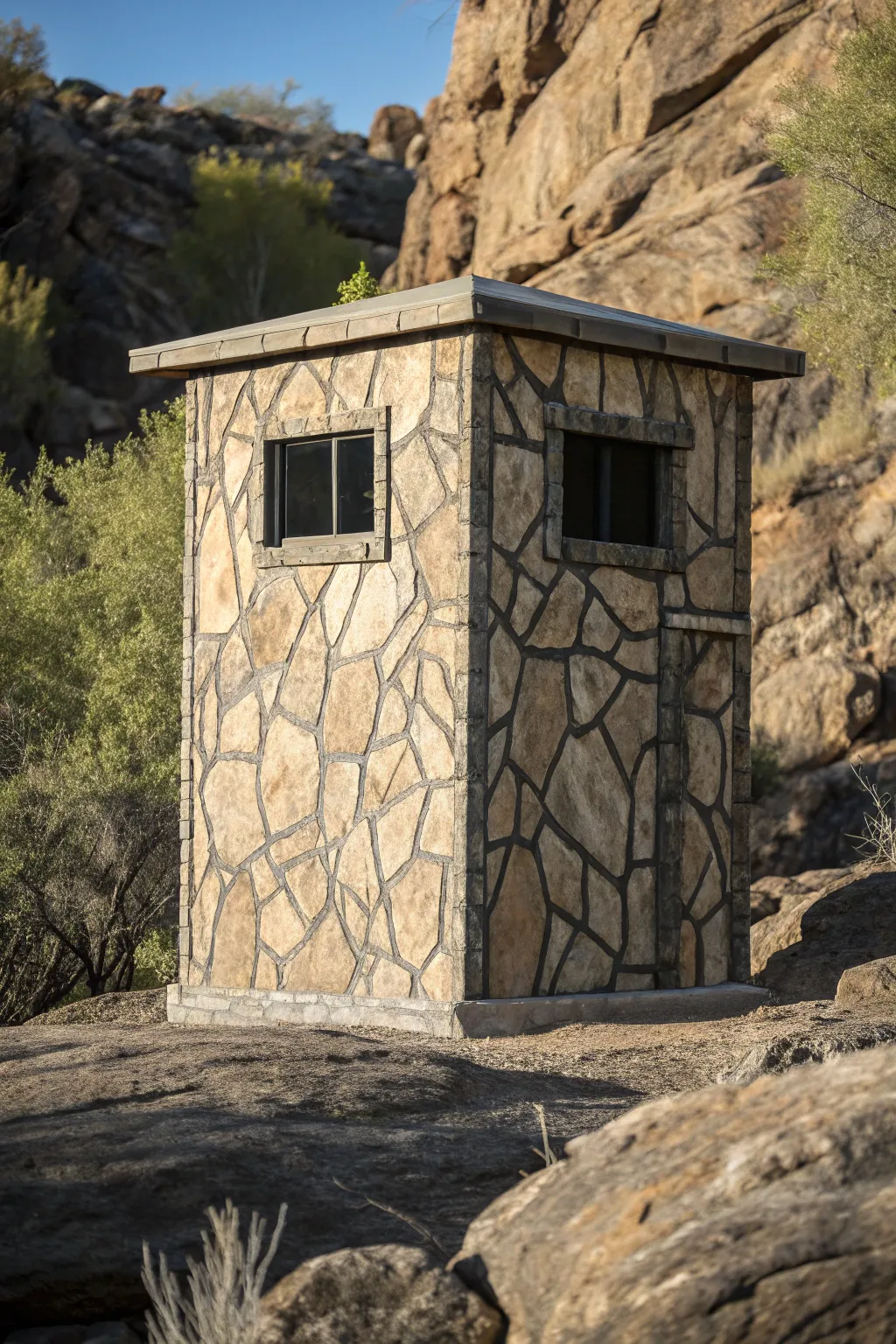
Faux Rock Exterior for Ultimate Disguise

Creating a faux rock exterior can turn your blind into an unnoticeable feature. I experimented with this once, and it blended right into the rocky terrain. If you want your gear to match, you can use similar texturing techniques to sponge paint a rifle stock.