
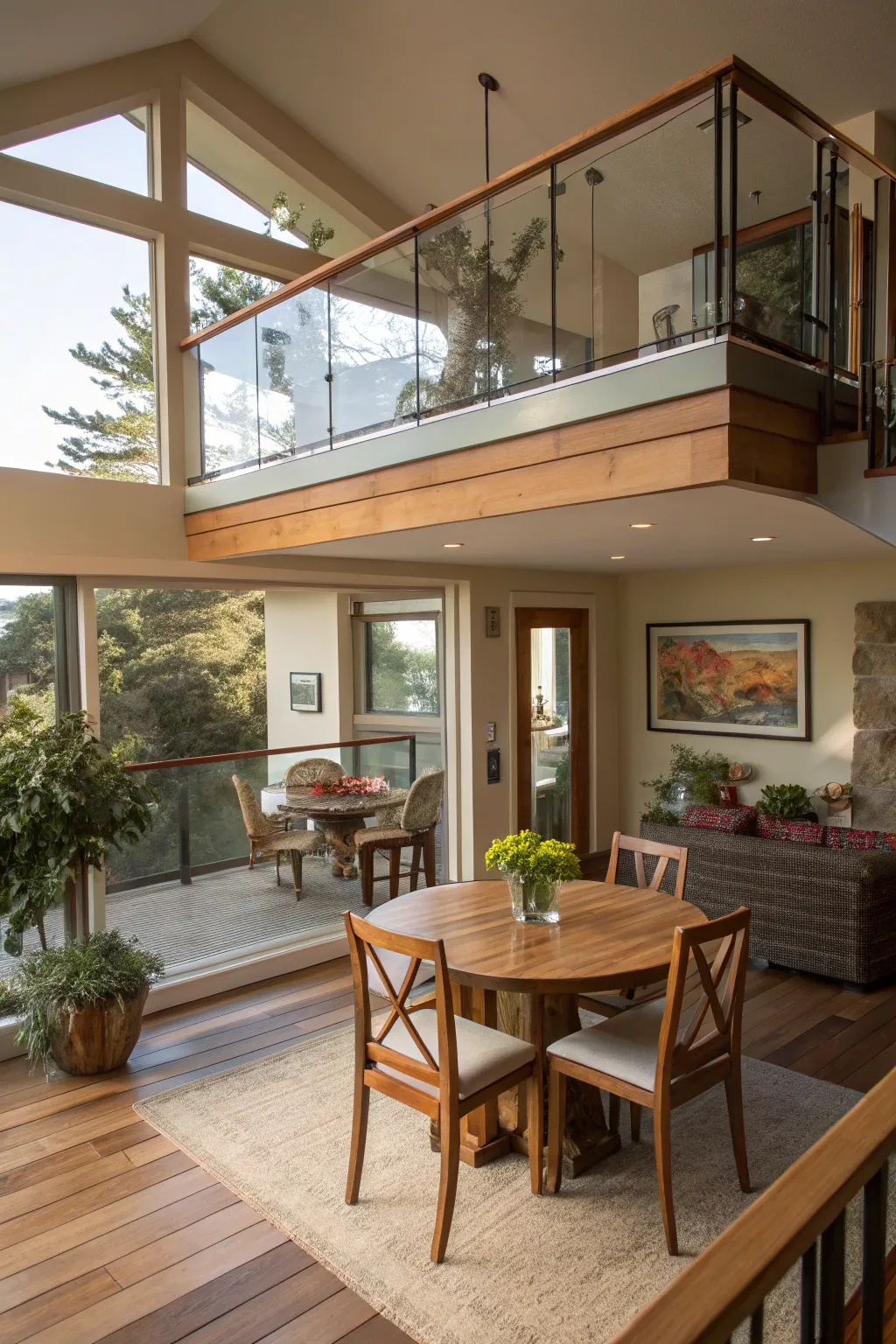
Dividing a living room and dining room in an open-plan space can be both a challenge and an opportunity to create harmony and function. Let’s explore some creative and stylish ways to define these areas without sacrificing the open feel we all love.
Experiment with Artistic Dividers

Artistic dividers can add a wow factor while separating spaces. I’ve used them in creative projects to not only define areas but also to serve as conversation pieces. They are especially useful if you are looking for ways to divide a bedroom into two rooms without building a wall.
Use Glass Panels for Transparency

Glass panels provide division while keeping sightlines open. I appreciate how they allow light to flow through while maintaining a sense of space and privacy. If you want to enhance that privacy without losing natural light, exploring different frosted window designs is a great option.
The Power of a Statement Wall

Create a statement wall in one area to draw the eye and define the space. This technique can add character and is a favorite in my design toolkit. If you’re styling an eating area, incorporating some farmhouse dining room wall decor can make that focal point truly stand out.
Play with Ceiling Heights

Varying ceiling heights can help define different areas. Lowering the ceiling over the dining area can create a cozy, intimate feel distinct from the living space. This approach is especially useful when designing a low ceiling attic room.
Lighting to Define Spaces

Different lighting fixtures can create distinct zones. Try a bold chandelier over the dining table and softer lamps in the living area for a clear but gentle division. Upgrading your fixtures is one of many impactful room renovation ideas to completely transform your space.
Create a Multi-Functional Divider

A multi-functional divider can serve as both storage and separation. In some designs, I’ve used these to store books or display art, adding function to form. You can even incorporate clever tension rod storage to maximize the vertical space.
Using Curtains for Flexibility

Curtains can offer a flexible way to divide the room. I’ve used them in several projects to create a sense of privacy when needed, without permanent barriers. If you’re working with a shared main space, exploring short curtains for your living room is a great place to start.
Partial Walls and Columns

Partial walls or columns can add architectural interest and a sense of separation. In several projects, I’ve used these features to maintain an open feel while adding structure.
Mixing Furniture Styles

Mixing furniture styles can effectively separate spaces. I often use traditional pieces in one area and contemporary in another to create a visual distinction. This approach works exceptionally well when designing an upstairs living room where you might need to blend a lounge area with a workspace.
Strategic Furniture Placement

One of the easiest ways to define your living and dining areas is through strategic furniture placement. I’ve often advised clients to use their sofas to create a natural boundary, and it works wonders!
Area Rugs for Distinction

Using area rugs is a favorite technique of mine to delineate spaces. By choosing complementary patterns or textures, you can create a visual separation that feels intentional and stylish.
Accent Pieces as Boundaries

Using accent pieces like plants or sculptures can create visual boundaries. I’ve found that these elements can also add a touch of nature or art to your home. These smaller items are excellent for creating subtle focal points.
Flooring Variations for Separation

Switching up the flooring between spaces can be very effective. I’ve used this in homes where transitioning from wood to tile helps define the dining area.
Creative Use of Lattice Screens

Lattice screens offer a stylish way to separate spaces while maintaining an airy feel. I love how these can add a decorative element with their intricate designs. They make a fantastic addition to your living room DIY home decor.
Incorporate Sliding Doors

Sliding doors can offer separation without closing off spaces completely. I love using them because they add flexibility and style to any open-plan area. If you are dealing with an outside entrance instead, there are plenty of creative ways to close off an exterior door.
Open Shelving as Dividers

Open shelving units can act as room dividers while providing storage and display space. I’ve seen this approach add character and functionality without closing off the room. This dual-purpose approach is also one of my favorite RV bedroom storage ideas.
Contrasting Color Schemes

A contrasting color scheme can beautifully separate your spaces. I love using different wall colors or accent pieces to subtly define each area while maintaining cohesion. For example, painting the structural pillars of a kitchen island with support beams in a bold hue creates a striking visual boundary.
Add Texture with Wall Treatments

Incorporating different wall textures can define spaces. I love using wood paneling or textured wallpaper to add depth and separation. You can even create your own scrap wood wall art for a unique, rustic touch.
Use Built-In Features

Built-in features like benches or storage can naturally divide spaces. They offer functionality while subtly marking the boundaries between areas.
Elevated Platforms for Definition

An elevated platform can add a level of distinction. In loft spaces, I’ve used platforms to lift the dining area, which naturally separates it from the living room.