
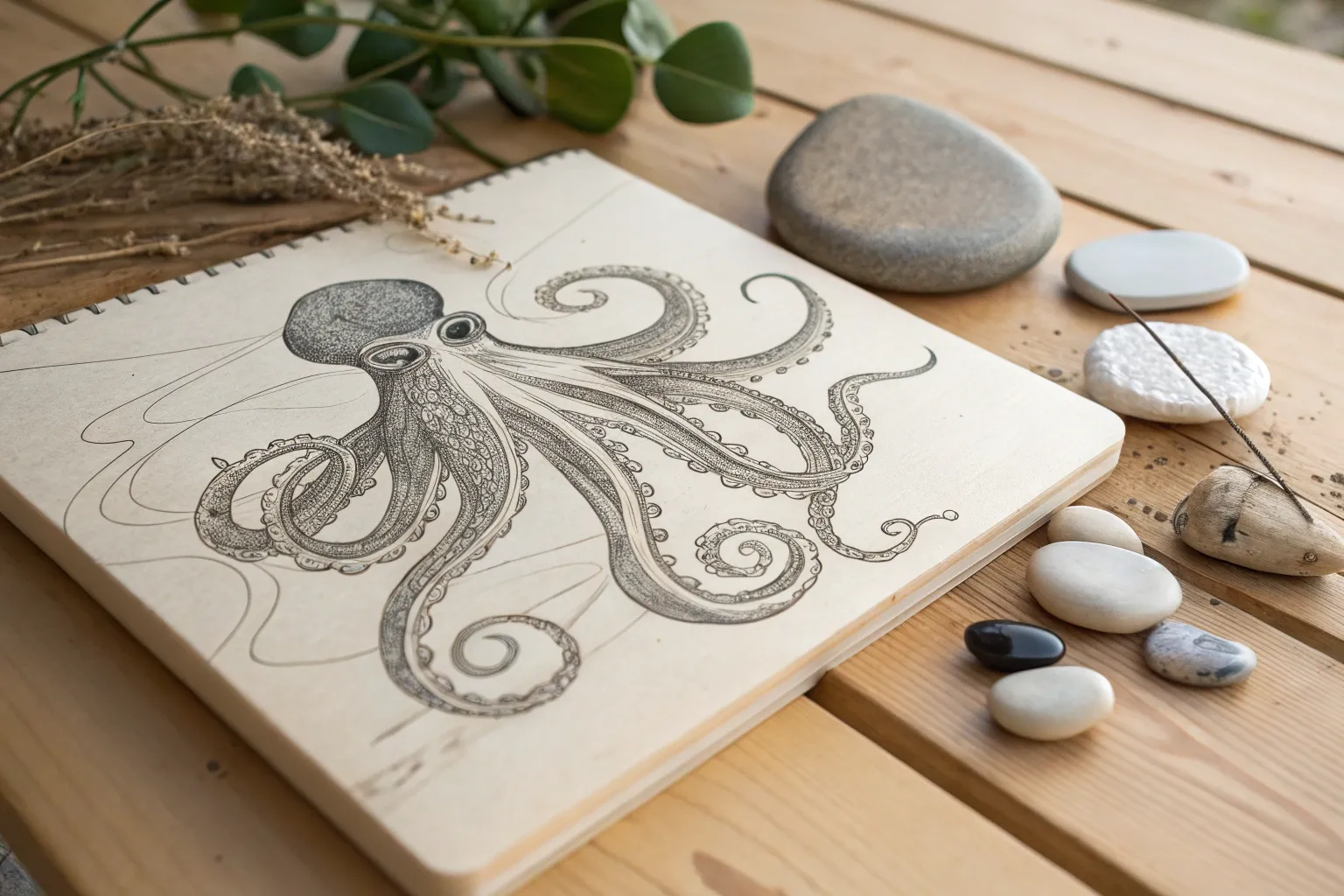
Drawing a realistic octopus can be both a delightful challenge and a rewarding experience. Let’s dive into a sea of creativity and explore some fantastic ideas to bring these fascinating creatures to life on paper.
Minimalist Approach

Try a minimalist style by focusing on the essential lines and forms. Sometimes, less is more, and this approach can highlight the elegance of the octopus. You can even apply these simple line techniques to various lips drawing ideas.
Pencil Sketch Foundations

Begin with a basic pencil sketch to lay down the foundation of your octopus. I often use light strokes to map out the form before diving into details, which saves me from erasing too much later.
Shadows and Highlights

Play with shadows and highlights to give depth to your octopus. In my experience, even the smallest highlight can make a big difference in portraying a lifelike quality.
Monochrome Magic

Try a black and white drawing to focus solely on contrast and detail. I find that stripping away color helps me hone in on the intricate patterns. If you love this monochrome aesthetic, it also translates beautifully into black and white classroom decor.
Vivid Color Pop

Add a splash of color while keeping it realistic with vivid hues. In my bright loft, I enjoy using watercolors to bring out the octopus’s natural vibrancy. Exploring different watercolor pencil drawing ideas can help you capture these striking details.
Step-by-Step Realism

Create a step-by-step guide to break down the drawing process. When I teach workshops, this method helps demystify the complexity and makes it approachable. You can apply this same structured approach to other hobbies, like following step-by-step craft lace patterns.
Dynamic Poses

Experiment with various poses to capture the octopus in motion. I love sketching them as if they’re swimming through my imagination, adding a sense of life. If you want to challenge your skills further, mastering these complex movements is a great addition to your list of hard drawing ideas.
Textured Backgrounds

Incorporate a textured background to add depth to your artwork. I enjoy using mixed media to create an ocean-like backdrop that complements the main subject.
Abstract Elements

Blend in abstract elements for a unique twist. By mixing realistic features with abstract patterns, I create a piece that’s both traditional and modern. This approach works beautifully when exploring new colored pencil drawing ideas.
3D Illusion

Create a 3D illusion by playing with perspective and depth. In my projects, I love using shading techniques to make the octopus seem like it’s coming off the page.
Mixed Media Creations

Combine different materials for a mixed media masterpiece. I often mix ink and watercolor to bring out both the fine details and vibrant colors. This approach is perfect if you are looking for fun art jamming ideas to try at home.
Negative Space Art

Use negative space creatively to define the octopus shape. This technique can make the creature appear as if it’s emerging from the background, adding intrigue.
Digital Realism

Try your hand at digital drawing for clean lines and vibrant colors. In my digital projects, I love the precision and flexibility that digital tools offer. This medium is especially great for exploring different family tree drawing ideas.
Vintage Style

Adopt a vintage style with sepia tones for an old-world charm. I often use this style to evoke a classic, timeless feel in my drawings.
Geometric Patterns

Incorporate geometric patterns into your octopus drawing for a modern twist. Using shapes to build the form can result in a striking and unexpected design. For more ocean-themed activities, explore other under the sea craft ideas for preschoolers.