
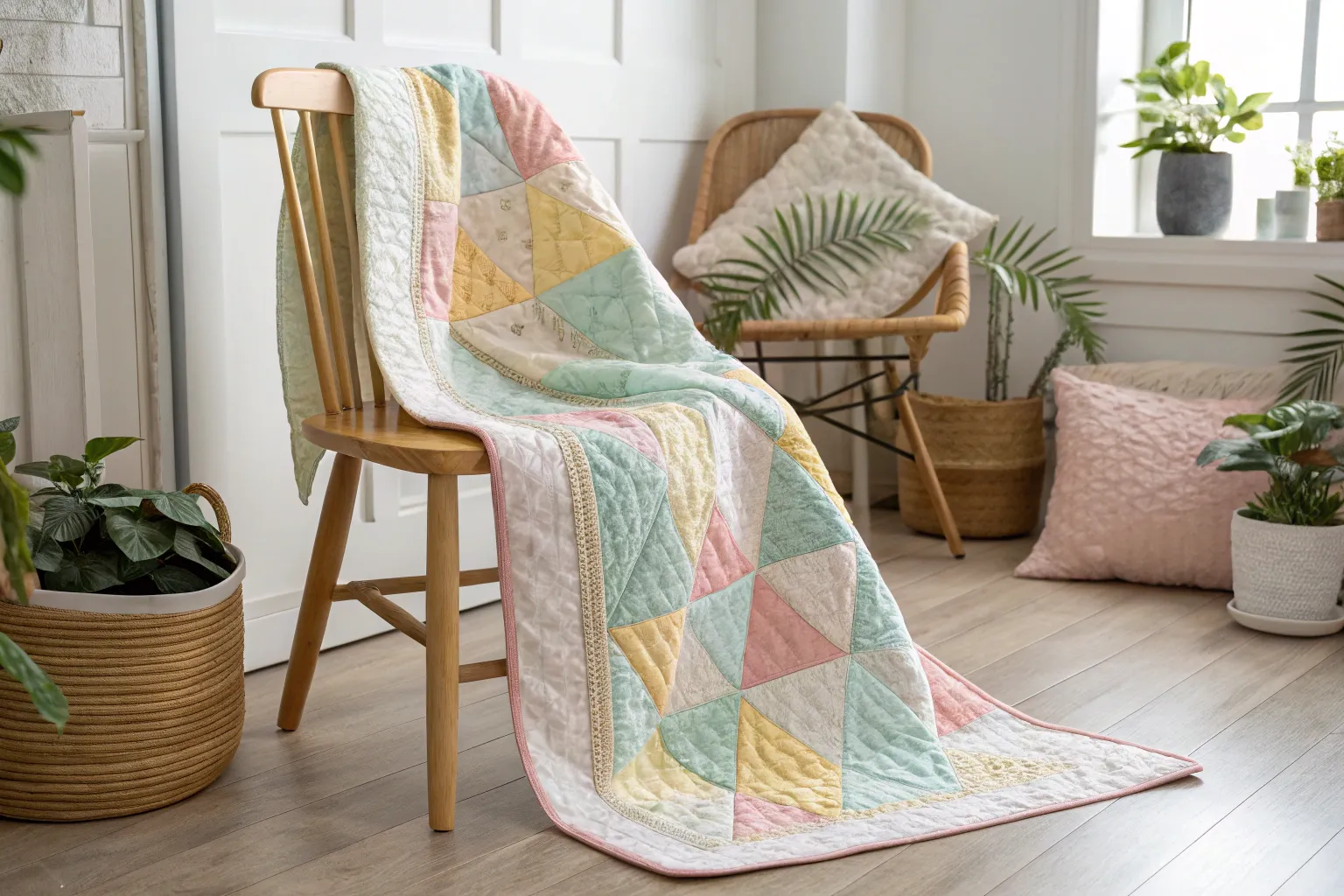
Creating a beautiful quilt back can be just as fun and rewarding as designing the front. Let’s explore some creative ideas that will transform your quilt backs into stunning pieces of art.
Jelly Roll Chase

Craft a quilt back using the Jelly Roll Chase technique. By sewing and folding long strips, you create an engaging design that’s quick and exciting. This technique pairs perfectly with many unique quilt patterns.
Striking Fabric Stripes

Stripes are a quick and effective way to add interest to your quilt back. I often use leftover fabric strips to create a bold, uncentered design that adds a modern touch. This technique is especially striking when incorporated into modern t-shirt quilts.
Leftover Fabric Marvel

Utilize leftover fabric from your quilt front to craft a coherent back. This approach not only saves resources but also creates a harmonious design that ties the entire quilt together. You can also use these same scraps to piece together modern quilt borders.
Orphaned Quilt Blocks

Those extra blocks from your quilt top can find a new home on the back. I’ve turned these lonely pieces into unique patterns, adding an element of surprise when you flip the quilt over. This is just one of many creative quilt backing ideas you can use to finish your project.
Scrap Fabric Collage

Raid your fabric stash and mix scraps from various projects into a patchwork masterpiece. It’s a sustainable way to clear clutter and create something uniquely yours. If your stash includes larger precuts, you can easily incorporate them into beautiful fat quarter quilt patterns.
Border Print Framing

Frame your quilt back with leftover border prints for a geometric appeal. I love how this technique creates a structured yet artistic look, perfect for adding depth. This framing method is also a wonderful way to enhance different panel quilt ideas.
Modern Asymmetry

Embrace modern design with an asymmetric layout. By rearranging leftover triangles and shapes, you can achieve a chic and contemporary back that complements a traditional front. This approach works beautifully if you are experimenting with modern Dresden Plate quilt ideas.
Improvised Layouts

Let spontaneity guide you by improvising with fabric pieces. I’ve found this method liberating, resulting in a dynamic and fluid design that reflects my creativity.
Panel Showcase

Turn a fabric panel into the star of your quilt back. It’s like displaying a fabric painting, adding visual interest and making the quilt reversible.
Large Print Display

Highlight large print fabrics by using them whole on the back. This approach preserves the beauty of the print, making it as captivating as the quilt top. Large-scale designs from batik quilt patterns are especially striking when displayed this way.
Cut and Flip Technique

Slice and rearrange strips of fabric to introduce a playful element to your quilt back. This method adds a surprising twist to traditional patterns. You can even use this technique to create unique quilt sashing and borders.
Supersized Block Patterns

Repeat and enlarge a favorite block from the front on the back. This creates a dramatic effect, showcasing your favorite designs in a new light.
Try New Techniques

Experiment with new quilting techniques or rulers on your quilt back. It’s a low-pressure way to learn and might just spark a new creative direction. You could even use this space to test out unique temperature quilt ideas.
Table Runner Inspiration

Incorporate a table runner design into your quilt back. This long and skinny pattern adds a unique element, often with less effort than a full quilt. Once finished, you can display your unique creation on a stylish quilt rack.
Label with Style

Design a quilt label that doubles as a decorative block. It’s a charming way to personalize your quilt while adding a functional element. Pin your label block to a quilt design wall to find the perfect placement before sewing.
Reverse Quilt Top

Create a secondary quilt top for the back. This approach makes your quilt reversible, offering two beautiful sides to showcase.
Magic Number Blocks

Use blocks of varying sizes that fit together like puzzle pieces. This method offers flexibility without the math, perfect for spontaneous creativity.