
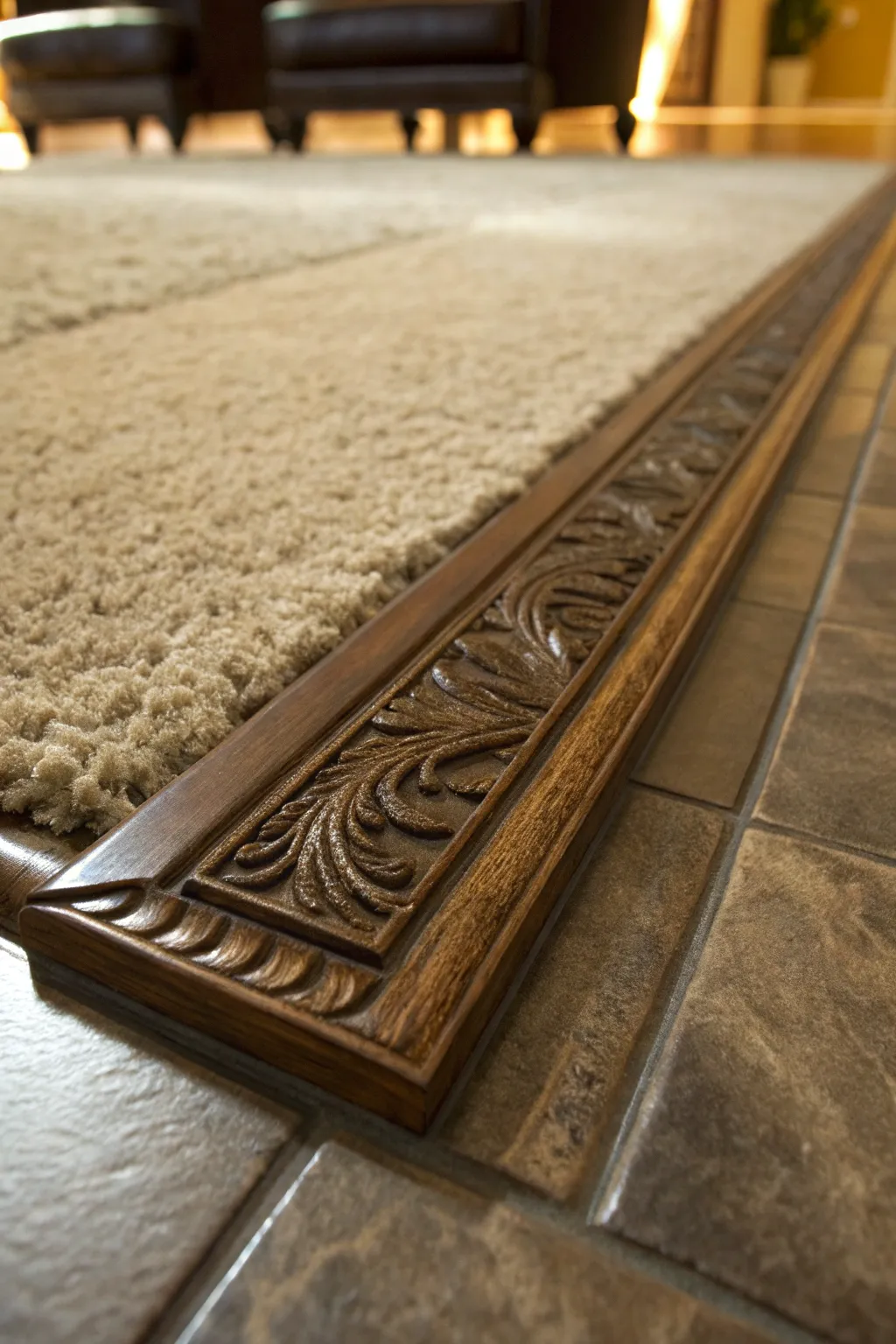
Navigating the world of uneven floors can feel a bit daunting, but with a bit of creativity, it can be an exciting design opportunity. Let’s explore some unique and practical ideas to bridge those floor level gaps in style.
Wooden Transition Strips

Consider using wooden transition strips to elegantly bridge the gap between different floor heights. I once crafted a custom oak strip that seamlessly matched the color of my floor, and it worked wonders in my living room. If wood isn’t your preferred style, there are plenty of other threshold ideas for uneven floors to explore.
Vinyl Transition Strips

Vinyl transition strips are durable and easy to install. I used them in a high-traffic area of my home, and they’ve stood up well to daily wear and tear. They are the perfect finishing touch for many DIY flooring ideas.
Decorative Metal Inlays

Add a touch of glamour with decorative metal inlays. I’ve used brass inlays to separate my dining area from the kitchen, and it creates a striking visual effect. If you enjoy working with these fine details, you might also love exploring creative guitar inlay ideas for your next DIY project.
Pebble Mosaic Border

For a nature-inspired look, try using a pebble mosaic border as a transition. It’s a technique I used in my bathroom, and it adds a touch of spa-like tranquility while masking height differences. This transition works beautifully if you are connecting tile to painted plywood floors.
Cork Floor Transition

Cork is an eco-friendly choice that offers a soft transition. I used cork strips in my home office, and they provide a gentle cushion underfoot.
Tile to Wood Sloped Transition

A sloped transition piece between tile and wood can create a seamless look. I used this in my entryway to connect my farmhouse tile floor and wooden floors beautifully.
Laminate Threshold

Laminate thresholds are versatile and match many flooring styles. I found them particularly useful in my kitchen, where they seamlessly connect different surfaces. They are also a great finishing touch if you are exploring different flooring over concrete ideas for a basement or ground-level room.
Floating Platform

Consider building a floating platform to even out a large area. I once helped a friend create a floating space in her loft, making it a cozy reading nook.
Terrazzo Transition

Add a splash of color with a terrazzo transition. I experimented with this look in my bathroom, and it’s a conversation starter every time. To brighten up the space and highlight the colorful chips, consider adding a stylish floor lamp nearby.
Metal Threshold

A sleek metal threshold can provide a modern touch to your transitions. I once used an aluminum strip in my studio, and it added a contemporary flair to my workspace. That same contemporary aesthetic inspired me to try some new modern quilt border ideas for my latest sewing projects.
Glass Transition Panels

For a modern twist, use glass transition panels. This is something I experimented with in my studio, and it adds a chic, industrial vibe. To complete the industrial look, consider pairing them with one of these custom DIY floor lamps.
Tile Border

Create a tile border to define and transition between spaces. This was a fun project in my kitchen, adding both function and flair to the area. This technique is a great way to frame your DIY hardwood floors.
Natural Stone Threshold

A natural stone threshold can add elegance and durability. I installed one in my bathroom, and it’s as beautiful as it is functional. The timeless appeal of this material also works beautifully outdoors in natural stone retaining walls.
Custom-Cut Tiles

Get creative by cutting tiles into unique shapes to transition between heights. In my kitchen, custom-cut tiles added a playful yet polished look that guests always notice.
Custom Wood Molding

Craft a custom wood molding to fit the exact height difference. I made one for my hallway, and it now blends perfectly with the rest of the woodwork.
Reclaimed Wood Transition

Using reclaimed wood adds character and sustainability to your transitions. I’ve used this material in my studio, and it’s both eco-friendly and charming. If you’re inspired to build furniture with your leftover timber, exploring different wood slab table leg ideas can complete the rustic look.
Concrete Overlay

Consider a concrete overlay for a seamless industrial look. It’s a method I used in my studio, giving the space a modern, cohesive feel that’s perfect for working on projects like modern T-shirt quilts.
Layered Rugs

Layering rugs can effectively disguise floor height differences while adding texture. In my living room, layered rugs create a cozy atmosphere and cleverly mask transitions.
Adjustable Floor Ramps

Try adjustable floor ramps for areas that may need future modification. I used one in my hallway, and it’s a flexible solution for evolving spaces.
Carpet to Tile Reducer

A carpet to tile reducer is perfect for softening the transition between these surfaces. I installed one in my bedroom doorway, and it’s not only practical but also visually appealing. This type of transition is also incredibly useful if you are exploring different playroom flooring ideas that meet the carpet in your hallway.