
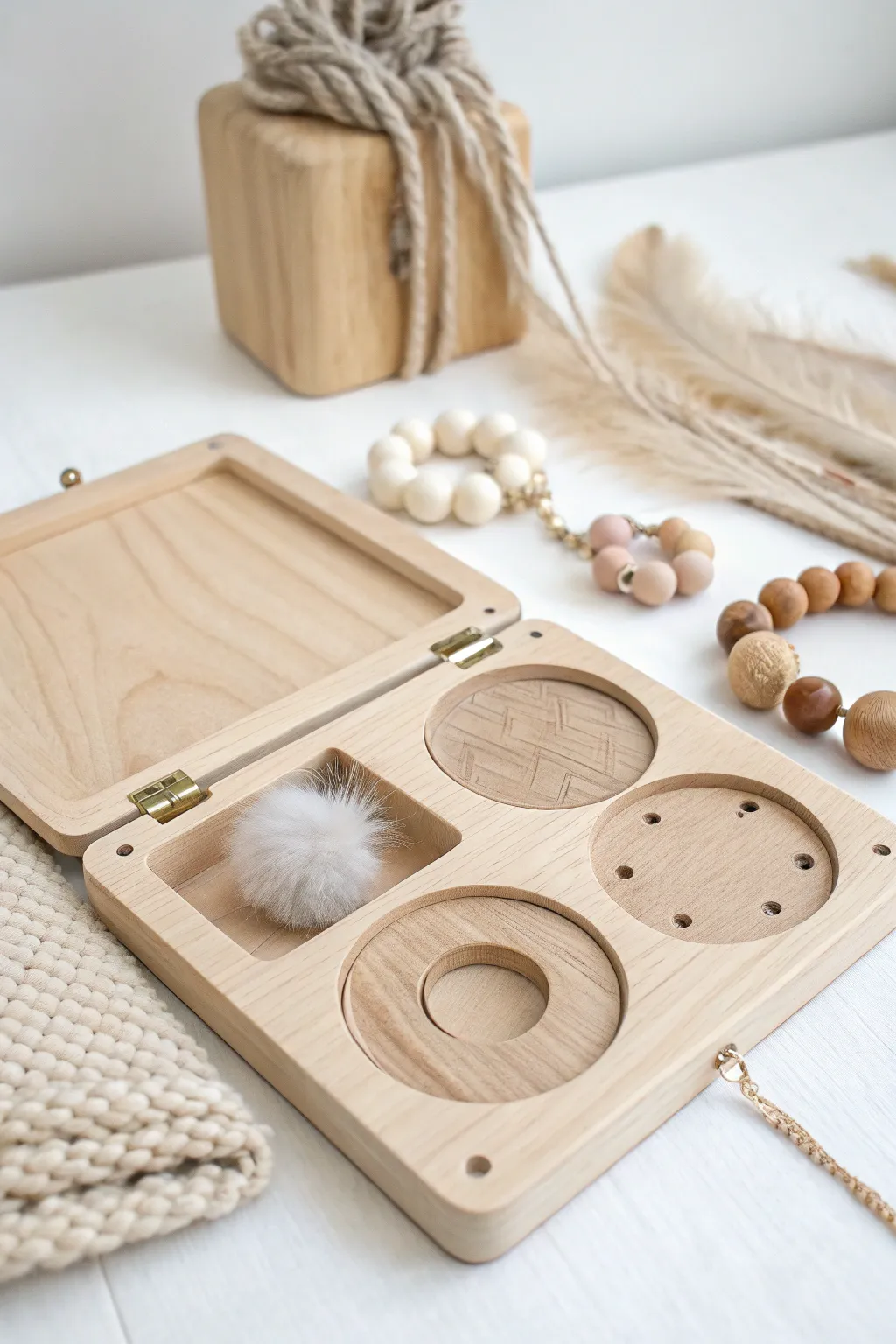
When it comes to creating a space for exploration and engagement, sensory boards can be a treasure trove of fun and learning for children with autism. In this article, let’s explore some creative ideas that you can make right at home.
Exploration Encouragement

Design elements that encourage exploration, like flaps to lift or doors to open. It’s like a mini treasure hunt that keeps kids engaged. To further stimulate their curiosity, try incorporating fun water sensory play ideas into their routine.
Textured Surfaces

Mix and match textures like sandpaper, felt, and bubble wrap to create a tactile wonderland. I’ve found that contrasting surfaces can keep little hands busy and curious. These materials are perfect for building a DIY sensory wall.
Lively Locks

Introduce locks and latches for a playful challenge. When my niece mastered a lock, her smile was worth a thousand DIY projects.
Zipping Zippers

Add a variety of zippers for that satisfying zip sound. It’s a simple pleasure that never fails to delight and is great for improving dexterity.
Button Bonanza

A collection of colorful buttons can provide a delightful tactile experience and visual stimulation. I love how they can turn an ordinary board into a vibrant display. They are a perfect material to include in sensory crafts for kids.
Number Play

Add numbers for a playful way to introduce counting. I’ve seen kids light up as they count and reorder these numbers on their own. Stringing them up as part of a preschool banner makes learning even more engaging.
Shape Sorting

Include different shapes to boost recognition skills and creativity. Using magnetic shapes, I often see kids create their own little art pieces on the board. Once they finish, you can show off their masterpieces using these kids art display ideas.
Bead Threading

Incorporate beads and strings for threading to enhance fine motor skills. Watching children focus and thread with determination is incredibly rewarding.
Musical Bells

Attach a few small bells for a gentle auditory surprise. It’s a joy to see the excitement on children’s faces when they discover the source of the sound. This makes a wonderful addition to any home sensory path.
Personalized Themes

Create a board with a personal theme that resonates with the child’s interests, like a favorite animal or hobby. Personal touches make each board uniquely special. You can even adapt these themes into engaging sensory table ideas for preschool play.
Sound Pads

Incorporate sound pads or squeaky elements for auditory stimulation. The element of surprise keeps the experience fresh and exciting. You can even hide these noisemakers under different sensory bin fillers for an added challenge.
Eco-Friendly Materials

Consider using sustainable or recycled materials to craft your board. It not only adds character but also teaches an important lesson in creativity and resourcefulness.
Sensory Surprise

Add a hidden compartment with a sensory surprise, like feathery pom-poms or a soft cloth. It’s a little secret that turns the board into a mini adventure. For more tactile play, try putting together a space sensory bin.